HYDieCasting

In precision zinc alloy die casting, alloy selection directly influences product performance, mold life, surface finishing quality, and overall manufacturing cost.
Drawing on 18+ years of export manufacturing experience and an IATF 16949-certified quality management system, Huayin Precision provides a systematic guide to zinc alloy materials, covering everything from standard ZAMAK grades to high-performance ZA alloys.
This guide helps R&D engineers, product designers, and procurement managers select the most suitable alloy based on performance requirements, application needs, and cost considerations during the early design stage.
Standard ZAMAK alloys:
ZAMAK alloys are widely used in precision die casting applications where excellent dimensional accuracy, surface finish quality, and cost efficiency are required.
ZA Series Alloys
These alloys have a higher aluminium content than standard alloys (designated by the prefix ‘ZA’ followed by the percentage of aluminium), including ZA-8, ZA-12 and ZA-27. These alloys offer higher strength and excellent bearing performance.
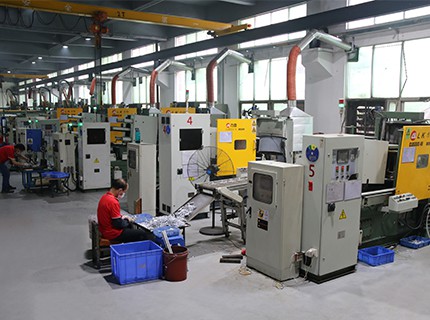
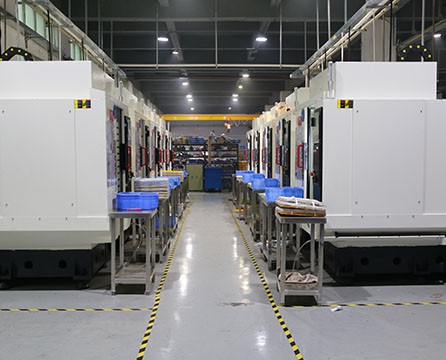
With over 170 production and inspection machines, including 20+ die casting machines and advanced quality control equipment, Huayin Precision optimises melting and casting parameters for different zinc alloy grades to ensure stable and repeatable production quality.
For most decorative components, ZAMAK alloys are typically selected due to their excellent castability, dimensional accuracy, and superior surface finishing performance.
Our engineering team evaluates alloy selection based on product structure, surface requirements, and production volume to ensure the selected material meets both performance expectations and long-term mass production requirements.
1.Alloy 3 (ZAMAK 3): The Industry Standard for Precision Zinc Die Casting
Alloy 3 (ZAMAK 3) is one of the most widely used zinc die casting alloys in North America. Its balanced mechanical properties, excellent castability, and long-term dimensional stability make it a benchmark material for precision zinc die casting applications. It also provides excellent surface finishing performance, including electroplating, painting, and chromate conversion coating.
Key applications: high-end perfume bottle caps, premium lipstick tubes, brand emblems, and other decorative components. In Huayin Precision’s experience delivering high-end zinc alloy parts, ZAMAK 3 is often selected for products requiring intricate details and premium surface appearance.
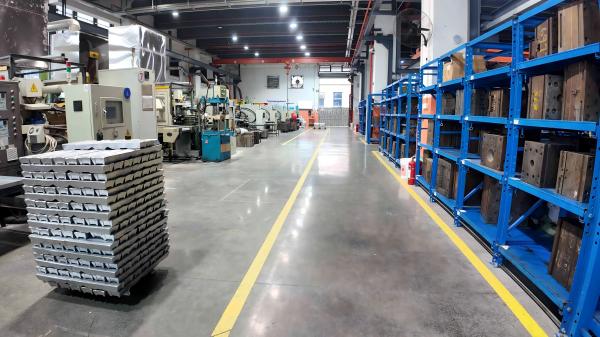
Huayin Precision prioritises the use of high-purity zinc ingots with strict control of lead and tin impurities, helping minimise the risk of blistering and adhesion issues during electroplating processes.
2.Alloy 5 (ZAMAK 5): Enhanced Strength and Creep Resistance for Structural Die Casting Parts
ZAMAK 5 is one of the most widely used zinc die casting alloys in Europe. Compared with ZAMAK 3, it contains a higher copper content, which improves creep resistance, hardness, and mechanical strength. However, its lower ductility may limit secondary operations such as bending, riveting, or crimping.
Typical applications include: smart lock panels, electronic housings, and automotive handles. For large panels exceeding 300 mm, Huayin Precision typically recommends ZAMAK 5 due to its improved strength and dimensional stability. Combined with 400-tonne die casting capability and optimised process control, Huayin helps reduce deformation risks during long-term use while maintaining flatness within 0.1 mm to 0.15 mm.
3.Alloy 7 (ZAMAK 7): Optimised for Complex Thin-Walled Zinc Die Casting Components
ZAMAK 7 is an improved version of ZAMAK 3, featuring reduced magnesium content and tighter impurity control. These characteristics provide improved fluidity, ductility, and surface finish quality, making it suitable for precision zinc die casting components with thin walls and demanding appearance requirements.
For designs requiring ultra-thin walls (around 0.6 mm or below) and intricate 3D embossed details, Huayin Precision typically selects ZAMAK 7 due to its excellent filling capability and surface performance. The alloy helps minimise flow marks, improves polishing efficiency, and preserves sharp design details for high-end decorative components.
4.Alloy 2 (ZAMAK 2): Maximum Hardness and Superior Bearing Performance
ZAMAK 2 offers the highest strength and hardness among the standard ZAMAK alloys. Its higher copper content (approximately 3%) provides excellent mechanical strength and wear resistance. However, compared with other ZAMAK grades, it may experience slight dimensional changes and reduced ductility after long-term ageing, which should be considered during product design.
Due to its excellent bearing properties, ZAMAK 2 can reduce the need for additional bushings or wear-resistant inserts in suitable applications. It is commonly selected for components requiring high hardness, wear resistance, and long-term durability.
5.High-Fluidity Alloy (HF Alloy): Enabling Ultra-Thin Wall and Complex Die Casting Designs
High-Fluidity Alloy (HF Alloy) maintains mechanical properties comparable to conventional zinc alloys while providing significantly improved flowability. With approximately 40% higher fluidity, it is particularly suitable for ultra-thin wall components and complex geometries that may be challenging to fill using standard ZAMAK 3 or ZAMAK 5 alloys.
For applications such as 5G communication module housings and micro-precision electronic components, HF alloy provides an advanced material solution for demanding designs. Its superior filling capability helps minimise short shots and casting defects, improving production yield and consistency.
| Grade | Key Characteristics & Huayin Engineering Recommendations | Typical Applications |
| ZA-8 | Suitable for hot-chamber die casting. Provides higher strength and creep resistance than ZAMAK 5. Huayin Precision recommends ZA-8 for projects requiring a balance between production efficiency and structural performance. | Industrial structural components, precision brackets |
| ZA-12 | An excellent material for gravity casting and cold-chamber die casting applications. Provides excellent bearing performance and can be electroplated, although coating adhesion may be slightly lower than standard ZAMAK alloys. | Heavy-duty hardware, bushing replacement components |
| ZA-27 | Offers extremely high strength and load-bearing capability. Huayin Precision recommends ZA-27 for high-performance components requiring maximum mechanical strength where decorative finishing is not the primary requirement. | Transmission gears, high-load connection components |
When Should You Choose ZA Alloys Instead of ZAMAK?
|
Requirement |
Recommended Alloy |
|
Premium appearance & plating |
ZAMAK 3 / 7 |
|
Smart lock & structural panels |
ZAMAK 5 |
|
Higher strength requirement |
ZA-8 |
|
Wear resistance & bearing performance |
ZA-12 |
|
Maximum load capacity |
ZA-27 |
Intro:Selecting the right zinc alloy requires understanding the relationship between mechanical properties, casting performance, surface finishing requirements, and application needs.
Note: The following data is compiled from industry reference values and Huayin Precision’s internal testing experience. Actual properties may vary depending on alloy condition, casting parameters, and component design.
|
Property |
Zamak 2 |
Zamak 3 |
Zamak 5 |
Zamak 7 |
ZA-8 |
ZA-12 |
ZA-27 |
|
Tensile Strength (MPa) |
359 |
283 |
331 |
283 |
374 |
404 |
431 |
|
Yield Strength (MPa) |
283 |
221 |
269 |
221 |
290 |
310 |
380 |
|
Hardness (Brinell) |
100 |
82 |
91 |
80 |
103 |
105 |
116 |
|
Elongation (% in 50mm) |
7 |
10 |
7 |
13 |
6-10 |
4-7 |
1-3 |
|
Density (g/cm³) |
6.6 |
6.6 |
6.6 |
6.6 |
6.3 |
6.0 |
5.0 |
|
Melting Range (°C) |
379-390 |
381-387 |
380-386 |
381-387 |
375-404 |
377-432 |
376-484 |
How to Select the Right Alloy for Your Application
|
Customer Requirement |
Recommended Alloy |
|
Premium appearance & electroplating |
ZAMAK 3 |
|
Thin-wall decorative parts |
ZAMAK 7 |
|
Structural housings & panels |
ZAMAK 5 |
|
Wear-resistant components |
ZAMAK 2 / ZA-12 |
|
High-load components |
ZA-27 |
|
Ultra-thin complex designs |
HF Alloy |
Selecting the right zinc alloy is not only about comparing mechanical properties. The final decision should also consider product structure, surface finishing requirements, production volume, and long-term manufacturing stability.
Huayin Precision provides engineering-based material selection support to help customers achieve the optimal balance between performance and cost.
Avoid Over-Specifying Surface Requirements
While zinc alloys offer excellent polishing and finishing performance, unnecessarily tight surface roughness requirements may increase machining and finishing costs. During the DFM stage, Huayin evaluates surface treatment requirements and recommends practical substrate specifications to achieve the required appearance without unnecessary cost increases.
Ensure Material Consistency for Stable Production
Consistent alloy composition is critical for die casting performance and surface finishing quality. Huayin Precision applies strict material control and verification procedures to ensure that selected alloy grades meet production requirements and maintain long-term consistency.
Rapid Engineering Support
With a team of 35+ experienced engineers, Huayin Precision provides alloy selection recommendations based on your 3D drawings within 1–3 working hours, helping customers shorten the early-stage evaluation cycle.
Q1: Why not use ZA-27 for smart lock faceplates if it provides higher strength?
Although ZA-27 offers extremely high strength, it typically requires cold-chamber die casting, which may increase production complexity and cost. It is also less suitable for decorative electroplating. For smart lock components requiring both structural performance and premium appearance, ZAMAK 5 often provides a better balance between strength, manufacturability, and surface finishing capability.
Q2: What risks can uncontrolled remelted material create for ZAMAK alloys?
Uncontrolled use of remelted material may introduce excessive impurities such as lead and tin, affecting alloy consistency and increasing the risk of plating defects, including poor adhesion and blistering. Material traceability and composition control are essential for stable zinc die casting production.
Q3: How does Huayin ensure consistent alloy composition during production?
Huayin Precision applies material verification procedures, including in-house spectrometry analysis, to monitor alloy composition during production and ensure consistency between material specifications and finished components.
Need help selecting the right zinc alloy for your project?
Upload your 3D drawing and Huayin’s engineering team will recommend the most suitable material based on your product requirements, surface finish expectations, and production goals.