HYDieCasting

Short answer: The right die casting manufacturer should be able to evaluate your CAD files, identify tooling and production risks, control quality, coordinate finishing and machining, protect confidential information, and support the project from samples through repeat production.
A die casting quotation is only as useful as the technical assumptions behind it. Two suppliers may quote the same part while making different assumptions about alloy, wall thickness, parting line, machining allowance, surface finish, inspection scope, packaging, or annual volume. The lower number may therefore represent a different manufacturing solution rather than a better commercial offer.
The first step is to evaluate whether a manufacturer can understand the part before discussing price. A capable supplier should be able to review the 3D CAD model and 2D drawing, identify critical-to-function dimensions, question unclear requirements, and explain which features will be cast, trimmed, machined, or finished after casting. This early engineering conversation is often the best predictor of project risk.
Start by separating the material decision from the supplier decision. Zinc and Zamak die casting are often selected for compact, complex, appearance-sensitive components and parts that require a refined surface finish. Aluminum die casting is often considered when lower weight, structural performance, or heat dissipation is important. The correct choice depends on the function of the part, not on a generic material advantage.
Ask the manufacturer to explain its experience with the alloy family relevant to your design. For zinc projects, confirm which Zamak grades are routinely processed and whether the proposed alloy is appropriate for strength, appearance, machining, plating, or assembly requirements. For aluminum projects, confirm the grades supported and whether the supplier understands porosity, warpage, heat dissipation, and post-machining risks.
A useful supplier should also explain what the material choice changes in the process: tooling design, casting behavior, wall thickness, dimensional control, surface preparation, and inspection. Avoid suppliers that simply repeat alloy names without connecting them to your part function. For related guidance, review Review Huayin zinc alloy die casting services and Read the Zamak alloy selection guide.
A die casting manufacturer should contribute engineering judgment before the mold is released. Request a sample DFM review or ask how the supplier evaluates draft angles, wall thickness, ribs, bosses, holes, threads, parting lines, gates, overflows, vents, slides, ejection, and machining datums.
The most useful DFM feedback is specific. It should show which area creates a risk, why the risk exists, what design or process options are available, and how the result will be verified. For example, a supplier may recommend changing a local wall transition, moving a gate, adding a draft angle, defining a machining datum, or separating a cosmetic surface from an ejection area.
Also evaluate the communication model. New product development benefits from a named project team, clear revision control, rapid responses, and documented decisions. A supplier that cannot keep design changes, drawing revisions, sample comments, and approval status aligned may create more risk than a supplier with a slightly higher initial quote. For related guidance, review Start with the die casting service scope.
Tooling is one of the most important long-term decisions in a die casting project. Compare suppliers on mold design, mold steel, cavity strategy, runner and gate design, cooling, venting, slides, ejectors, polishing, trial shots, maintenance, repair, and ownership terms—not only on the initial mold price.
Ask for a clear tooling workflow: design review, mold design approval, machining, EDM where required, assembly, first trial, dimensional review, correction, second trial, sample approval, and production release. The supplier should explain how tooling changes are recorded and how the final approved design is controlled.
Tooling life should be treated as a project-specific engineering statement. It depends on alloy, geometry, process conditions, maintenance, and production volume. If a supplier provides a shot-life figure, request the basis and the applicable conditions rather than accepting an unsupported headline number. For related guidance, review Review die casting mold design and tooling.
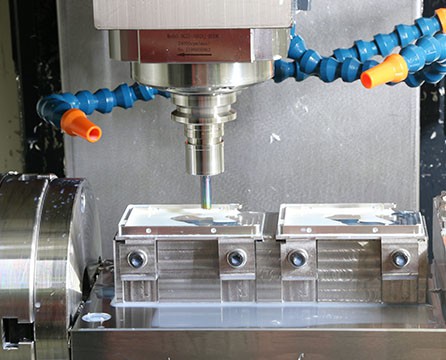
A die-cast component rarely ends at the casting machine. Your supplier may need to manage trimming, deflashing, deburring, drilling, tapping, reaming, CNC machining, polishing, brushing, plating, painting, powder coating, assembly, and packaging. The more handoffs a project has, the more important process ownership becomes.
Ask whether the manufacturer can coordinate the complete route or whether key steps are outsourced. Outsourcing is not automatically a weakness, but responsibilities, inspection points, confidentiality, and corrective-action ownership must be clear. The quotation should identify which operations are included, which are optional, and which require a separate technical review.
For appearance-critical zinc parts such as hardware, decorative components, or perfume caps, ask how the supplier controls cosmetic zones, surface preparation, plating adhesion, color consistency, coating thickness, and handling damage. For aluminum housings, ask how the supplier manages porosity, machining interfaces, paint or powder-coating adhesion, and corrosion protection. For related guidance, review Review die-casting surface finishing options.
Quality claims should be supported by a process, a responsible team, and records. Ask to see the inspection plan, sample approval method, in-process controls, final inspection report, traceability approach, nonconformance process, and corrective-action workflow. Confirm how critical dimensions, cosmetic requirements, material composition, surface treatment, and packaging are recorded.
Useful questions include: Is inspection performed at incoming, in-process, final, and shipping stages? Can the supplier trace a problem to a production batch, mold, and raw material? What happens when a dimension differs from the approved sample? How are customer complaints contained and closed? Which tests are performed in-house and which are coordinated externally?
The company profile supplied for this article lists a 30-plus-person quality team, IQC/IPQC/FQC/OQC/QE functions, AQL 1.5 controls, full pre-shipment inspection, traceability, and an in-house laboratory with 2.5D/3D measurement, salt-spray, temperature-and-humidity, tape, balance, and CT testing equipment. Buyers should still request current records, scope, and sample reports during qualification. For related guidance, see See the quality control process.
A supplier can have good machines and still fail a project through weak communication. During qualification, test how quickly the team answers technical questions, how clearly it identifies assumptions, and whether it can provide a realistic milestone plan for DFM, tooling, trial shots, samples, production, finishing, inspection, and shipment.
Do not compare delivery dates without comparing the included scope. Clarify whether the stated lead time covers tooling, sample approval, surface treatment, inspection, packaging, and export preparation. Confirm how schedule changes are communicated, how urgent issues are escalated, and whether production progress can be documented with photos, reports, or a shared project tracker.
For repeat production, ask how forecasts, engineering changes, tooling storage, capacity planning, and batch traceability are managed. A reliable production partner should be able to support the project after the first order rather than treating every repeat order as a new negotiation.
For brand owners and design companies, the supplier may receive unreleased product concepts, CAD files, packaging designs, customer information, and target-market details. Confirm whether the manufacturer can sign an NDA, restrict access to project information, control drawing revisions, and identify who may use images or samples for marketing.
Factory qualification should include an audit route. Ask whether on-site or video audits are available and whether the supplier can show the relevant production, tooling, inspection, and storage areas. Also request the documents needed for your internal approval process, such as company information, quality certificates, material or test reports, sample records, and corrective-action evidence. For related background, Learn more about the company and factory background.
A meaningful comparison should include tooling, casting yield, material utilization, cycle time, trimming, CNC operations, surface treatment, inspection, packaging, freight, duties, engineering changes, and expected repeat-order conditions. A supplier with a lower unit price may have excluded inspection, finishing, packaging, or tooling modifications.
Ask each supplier to state the assumptions behind the quotation. The RFQ should identify part weight, alloy, annual volume, order quantity, cavity arrangement if known, critical dimensions, surface finish, cosmetic zones, machining requirements, inspection documents, packaging, Incoterms, and sample approval requirements.
The goal is not simply to find the lowest quote. It is to identify the lowest-risk manufacturing route that meets the product, quality, schedule, and commercial requirements.
Before selecting a manufacturer, score each supplier against the same questions:
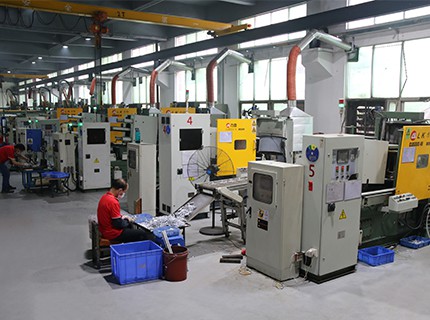
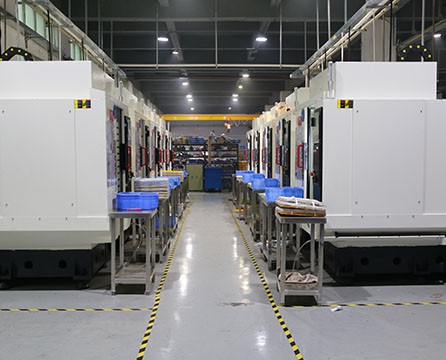
Based on the company profile supplied for this article, Huayin positions itself as a one-stop OEM/ODM source factory for zinc, Zamak, and aluminum die casting with CNC machining. The profile lists more than 18 years of experience, facilities totaling more than 20,000 square meters across China and Vietnam, more than 170 production and inspection devices, 35-plus design and engineering team members, and 200-plus employees.
The stated service route includes mold design, mold making, die casting, surface finishing, CNC machining, and assembly. The company also describes one-to-one project support, DFM feedback, factory audits, NDA support, production updates, sample test reports, and technical documentation. These points create a useful qualification starting point, but the correct next step is still a project-specific review of your CAD files, drawings, alloy, volume, surface finish, inspection, packaging, and delivery requirements.
For a meaningful evaluation, submit the latest 3D CAD model, 2D drawing, material requirement, surface-finish reference, annual volume, critical dimensions, assembly information, packaging requirements, and target schedule. Ask for a written DFM review and quotation assumptions before approving tooling.
The right die casting manufacturer is not simply the supplier with the lowest quotation or the largest equipment list. It is the partner that can connect design decisions to tooling, process control, finishing, inspection, documentation, delivery, and repeat production.
Use the checklist in this guide to compare suppliers consistently. Then move from general capability claims to project-specific evidence: a CAD review, DFM report, tooling plan, inspection plan, sample approval route, and clearly stated quotation assumptions. That is how a purchasing decision becomes an engineering decision—and how a die casting project starts with fewer surprises. When your project is ready, Submit your CAD drawing for project evaluation.
Send the latest 3D CAD model, 2D drawing, material requirement, surface-finish reference, annual volume, critical dimensions, assembly requirements, packaging needs, and target schedule.
Compare the assumptions and included scope: tooling, alloy, part weight, machining, finishing, inspection, packaging, freight, duties, lead time, and engineering changes—not only unit price.
Base the decision on part function, weight, strength, heat dissipation, geometry, appearance, machining, surface finish, and production volume. Request a material review for the specific design.
DFM review identifies risks in wall thickness, draft, ribs, bosses, parting lines, gates, vents, ejection, machining datums, and cosmetic surfaces before they become expensive tooling changes.
Look for incoming, in-process, final, and shipping controls; inspection records; traceability; sample approval; nonconformance containment; corrective action; and clear responsibility for outsourced processes.
Ask for the tooling workflow, design approval process, trial-shot plan, correction process, maintenance route, ownership terms, storage method, and the basis for any stated mold-life figure.
Some suppliers support small-batch validation. Confirm the available quantity, tooling arrangement, inspection scope, and how the project transitions from samples to repeat production.
Use an NDA, restrict access, control drawing revisions, define image and sample permissions, and confirm how customer information is stored and shared.
Depending on the project, request dimensional reports, material or composition records, surface-finish records, test reports, batch traceability, sample approval records, and corrective-action documentation.
Submit the complete RFQ package, request written DFM feedback and quotation assumptions, review tooling risks, confirm the inspection and sample-approval plan, then release tooling only after the design is controlled.