HYDieCasting

Article Summary
Choosing a Zamak alloy from a strength datasheet alone can create problems later in the project. The grade affects how the metal fills the die, how the tooling is reviewed, how a surface responds to polishing or plating, which features need CNC machining, and how the part behaves during assembly and production. Based on 18 years of zinc die casting project experience, this guide compares Zamak 3, Zamak 5, Zamak 7 and ZA alloys from a practical engineering and purchasing perspective.
Drawings often describe a component simply as “zinc alloy” or “Zamak.” That may be acceptable for an early budget discussion, but a tooling and finishing quotation needs more detail. A plated perfume cap, a lock housing with threaded bosses and a wear-loaded hardware part may all be zinc components. Their visible surfaces, assembly loads, dimensional requirements and service conditions are different.
A practical material review starts with the part function. The next questions are geometry, cosmetic areas, production volume, assembly load and final surface treatment. Only then should the proposed alloy be compared with the tooling and process route.
A grade that suits the mechanical requirement may require a different polishing, plating or dimensional-control plan. Confirming the grade early gives the tooling, casting, machining and finishing teams the same production target. For a broader project review, see our zinc alloy die casting service.
Zamak 3 is often reviewed when a project needs a balanced combination of castability, detail reproduction, dimensional behavior and compatibility with selected surface-finishing routes. It may be considered for decorative hardware, electronic housings, small structural components and parts that will be polished, electroplated, PVD-coated or painted.
It should not be selected by default for every zinc part. Long unsupported walls, repeated wear, high assembly loads or demanding service temperatures call for a separate geometry and process review. Stable production depends on the match between the grade, die design, casting conditions, trimming method and finishing route.
Zamak 5 may be considered when strength, hardness or repeated contact carries more weight than a typical decorative application. It is often reviewed for functional hardware, mechanical features and parts exposed to friction or wear.
Higher strength does not automatically make it the right grade. The review should also cover ductility, impact load, threaded features, surface requirements and dimensional expectations. If the part will be electroplated, confirm the material route, substrate condition and pretreatment sequence before approving the first sample. Plating variation or adhesion problems can result from the combined casting and finishing process, not from the alloy name alone.
Zamak 7 may be considered when a project requires a different balance of fluidity, material control and detail reproduction. It is not a universal replacement for Zamak 3 or Zamak 5. Its suitability depends on the part geometry, filling distance, die design, surface requirements and the supplier’s validated process route.
For a small component with fine features, ask why Zamak 7 is being proposed and what will be checked during sampling. The decision should be based on the actual filling and finishing plan rather than on the assumption that a named grade is automatically an upgrade.
ZA alloys contain more aluminum than conventional Zamak grades and may be considered for specific strength, hardness, wear or service-temperature requirements. Their casting behavior, equipment compatibility and finishing route should be reviewed separately from standard Zamak production.
Before committing to tooling, confirm the exact ZA grade, equipment route, die design, filling requirements, machining allowance and surface-treatment plan. The phrase “zinc alloy” is not specific enough for this decision.
| Selection dimension | Zamak 3 review focus | Zamak 5 review focus |
|---|---|---|
| Part function | Balanced casting and cosmetic requirements | Strength, hardness or wear requirements |
| Structural features | Fine details, small housings and decorative surfaces | Load-bearing or mechanically active features |
| Surface treatment | Polishing and decorative plating require substrate review | Confirm substrate condition and finishing compatibility before sampling |
| Assembly | Check threads, bosses and contact-surface fit | Check assembly load, wear points and dimensional stability |
| Pre-production confirmation | Verify grade, casting quality and finished cosmetic samples | Verify material control, load conditions and finish validation |
This table is a screening reference, not a substitute for a grade-specific engineering review. The approved grade should be recorded on the drawing, RFQ or material specification.
For perfume caps, furniture hardware and other visible components, the finish route often becomes a major selection factor. Confirm whether the part will be polished, electroplated, PVD-coated, painted or powder-coated before the tooling plan is fixed.
The casting surface must be suitable for trimming and preparation without exposing unacceptable pits or subsurface porosity. Zamak 3 is often a practical starting point for review. Zamak 5 may be considered when the same part also carries a stronger mechanical or wear requirement. Finish samples should be approved on the actual alloy and a representative casting surface.
Smart-lock housings and functional hardware often combine a visible exterior with bosses, threaded columns and assembly datums. The alloy cannot be judged by appearance alone. A heavy boss may leave a sink mark on a visible face, a deep threaded feature may need CNC machining, and plating may reveal subsurface porosity that was not visible on the as-cast part.
Before mold opening, review the alloy grade, boss structure, draft direction, ejection strategy and machining access together. The drawing should state whether a functional feature is cast, drilled, tapped or finish-machined.
For small parts with dense details, review filling distance, wall-thickness balance, last-fill location and venting. Good alloy fluidity cannot compensate for poor venting or an unbalanced section. The grade and die design should be assessed as one filling system.
For parts exposed to repeated friction, impact or mechanical load, compare the proposed grade with the contact area, support structure, assembly condition and service environment. Zamak 5 or a ZA grade may deserve evaluation, but the geometry remains part of the strength decision. A higher-strength material does not remove the need to correct a thin or poorly supported feature.
Different grades can require different filling and process considerations. During DFM review, check:
For slides, deep cavities or complex parting lines, involve the tooling team before the grade is finalized. Die casting mold design and tooling affect filling, ejection, maintenance and the location of marks on visible surfaces.
Polishing, electroplating, PVD and painting do not hide every casting problem. A finish may reveal a blister, uneven color or poor adhesion when preparation exposes a subsurface defect. That is why the raw casting, trimming, polishing allowance, cleaning, activation, base coat and final coating should be reviewed as one process chain.
For decorative zinc parts, define the cosmetic zones, acceptable pits and flow marks, edge condition, color or gloss reference and inspection method. For electroplated components, connect the material decision with the proposed Zamak electroplating process. For other coatings, confirm surface preparation and dimensional allowance before approving the sample.
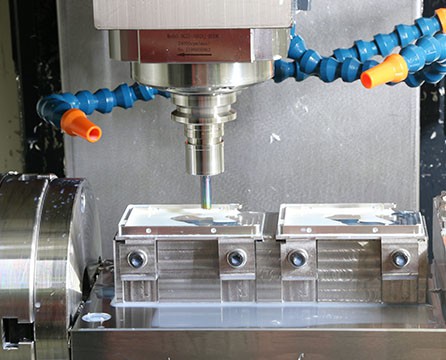
CNC machining is a controlled secondary operation, not a substitute for a sound casting design. It is commonly used for threaded holes, sealing faces, precision bores, mounting datums and selected assembly surfaces that are difficult to hold in the as-cast condition.
During quotation and DFM review, identify the dimensions that control function. Then decide whether each feature will be cast, drilled, tapped or finish-machined. The alloy, casting allowance, tool access and fixture position need to be reviewed together. Tightening every dimension without defining the datum and inspection method can add machining cost without improving the assembly.
A complete RFQ gives the supplier enough information to compare the material and process route. Include:
Ask the supplier to provide the alloy-selection basis, DFM concerns, tooling assumptions, finishing route and sample-approval plan in writing. This makes quotations easier to compare and reduces the chance of a late material substitution.
Neither grade is automatically better. Zamak 3 is often reviewed for balanced casting and cosmetic requirements, while Zamak 5 may be considered when strength, hardness or wear carries more weight. The part function and process route should decide the grade.
Zamak 3 is commonly reviewed for decorative plated parts, but the final result depends on casting soundness, surface preparation, polishing, pretreatment and the coating system. Approve the finish on the actual alloy and a representative casting.
Consider a ZA grade when the project has a specific strength, hardness, wear or service-temperature requirement that conventional Zamak grades may not address. Confirm equipment compatibility, casting behavior, machining and finishing before tooling.
A material change may affect filling, die conditions, machining, finishing and dimensional validation. Treat it as an engineering change rather than a purchasing substitution. Recheck the process and approve new samples where necessary.
No. Alloy selection and DFM work together. Wall thickness, ribs, bosses, draft, gates, vents, ejection and machining datums still influence production stability.
Yes. Send the CAD model, drawing, intended function, volume, finish requirement and current material preference through the project inquiry form. Our engineering team can then review the proposed grade alongside the part structure and manufacturing route.
There is no single Zamak grade for every product. Zamak 3, Zamak 5, Zamak 7 and ZA alloys each belong in a different engineering discussion. The decision depends on what the part must do, how it will look, which features need CNC, how it will be inspected and how it will be produced at the target volume.
Before mold opening, align the alloy specification with the 3D model, finish route, machining allowance and acceptance criteria. If you are developing a custom zinc die casting project, submit your drawings, target finish and estimated volume through Submit Your CAD File for a Zinc Die Casting Review.